← back to work
03Events / Culture
Founder–Investor Events
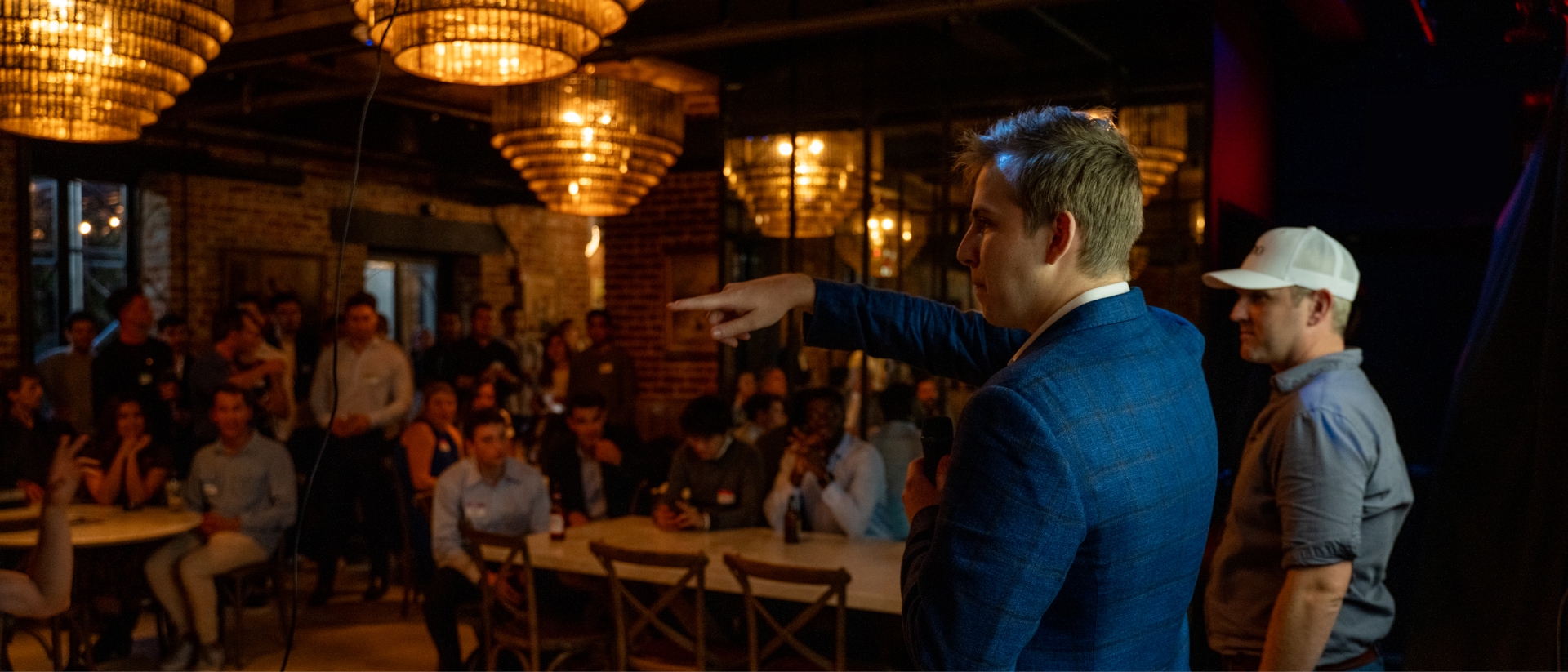
Marquee founder-and-investor events across both coasts — high-signal deal flow and white-glove relationship-building for VCs, LPs, and angels.
- Role
- Head of Ecosystem
- Year
- 2024
- Client
- LvlUp Ventures
- Stack
- Programming, Sponsorship, Operations
150+
per-event attendance
Carta · TriNet · Zendesk
enterprise sponsors
2 coasts
NYC & LA
Building founder-investor events around trust, not just attendance
LvlUp Ventures sat in the middle of a startup ecosystem where founders, investors, partners, and sponsors all needed something different from the same room. Founders wanted access to capital and sharper feedback. Investors wanted credible deal flow and a clearer signal on which companies were worth their time. Partners and sponsors wanted meaningful visibility with early-stage operators without making the experience feel transactional. The opportunity was to create events that did more than gather people. They had to make the right conversations easier to start and easier to continue afterward.
My role was to help turn that ecosystem into repeatable founder-investor programming. Under LvlUp Ventures, I supported founder-investor mixers, LP cocktail hours, demo-day-style programming, office hours, partner activations, and sponsor-backed events with partners including Carta, TriNet, and Zendesk. The task was not just event execution. It was building a better operating layer around access: who should be in the room, why they should meet, how founders should show up, how sponsors could add value, and how the relationships could keep moving after the event ended.
The hardest part was balancing curation with scale. A founder-investor event can lose its value quickly if the room feels random, over-sponsored, or too broad. Founders do not need more generic networking. They need relevant investors, thoughtful context, and a chance to tell their story in a way that connects. Investors do not want to be treated like an audience for every possible pitch. They want signal, trust, and efficient access to founders who fit their interests. Sponsors want to be visible, but the event still has to feel like it belongs to the founder community first.
To make that work, I focused on the pieces around the event as much as the event itself. That meant helping shape the audience mix, coordinating partner and sponsor involvement, thinking through founder readiness, supporting invite and attendance flows, and connecting event activity back to broader relationship-management workflows. The live event was only the most visible part of the system. The real work was the preparation before the room came together and the follow-up after people left.
I learned to treat these events as relationship infrastructure. Each program created new signals about the ecosystem: which founders were ready for investor conversations, which investors were actively interested in certain categories, which partners were most useful to the community, which sponsors strengthened the experience, and which relationships needed follow-up. That information mattered because it helped turn one-off events into a more durable network. The goal was not only to create a good night. The goal was to build a repeatable path for trust, access, and momentum.
That operating mindset became especially useful as my work later expanded more deeply into FundBetter’s fundraising advisory and investor-targeting systems. FundBetter sharpened the founder-support side of the work: helping founders refine their story, identify better-fit investors, manage outreach, and move through relationship-heavy fundraising workflows. But the event foundation came primarily from LvlUp Ventures, where I saw firsthand how live programming, partner ecosystems, and founder-investor relationships connect.
The result was a stronger understanding of how to design experiences that serve multiple stakeholders without losing the integrity of the community. I learned that a successful founder-investor event is not measured only by attendance. It is measured by the quality of the room, the usefulness of the conversations, the credibility of the partners, and whether the relationships have somewhere to go afterward. When the system works, the event becomes more than programming. It becomes a trusted access point inside a larger ecosystem.
The reflection for me is that this work sits at the center of how I like to operate. I enjoy building systems around messy human workflows: fundraising relationships, investor research, CRM pipelines, partner ecosystems, sponsor alignment, event follow-up, and community trust. These are areas where pure automation is not enough, but pure manual effort does not scale. The useful work is in the middle: creating enough structure that the workflow becomes repeatable, while preserving enough human judgment that the relationships still feel real.
For roles in venture platform, founder success, ecosystem building, partnerships, community, or event-led growth, this is one of the clearest examples of my operating style. I can help build the room, but I can also think about the system behind the room: the audience strategy, founder prep, partner value, sponsor fit, relationship data, follow-up motion, and metrics that show whether the experience is actually working. The event is the surface area. The real product is the trust network underneath it.
Next project
Nightshift Presents